AI Branding: Can AI Really Build Your Logo and Brand Identity?
AI branding: useful tool, unreliable author
Type logo for a boutique bakery into an AI image generator and you will get something attractive in nine seconds. That speed is real, and it is also the trap. A logo is a two-centimetre output of a much larger decision: what the business stands for, who it is for, and why anyone should choose it. AI is very good at the output and has no opinion about the decision.
So the fair question is not can AI design my brand? It is which parts of brand-building should AI touch, and which parts must stay human?
What AI does genuinely well in branding
Exploration at volume
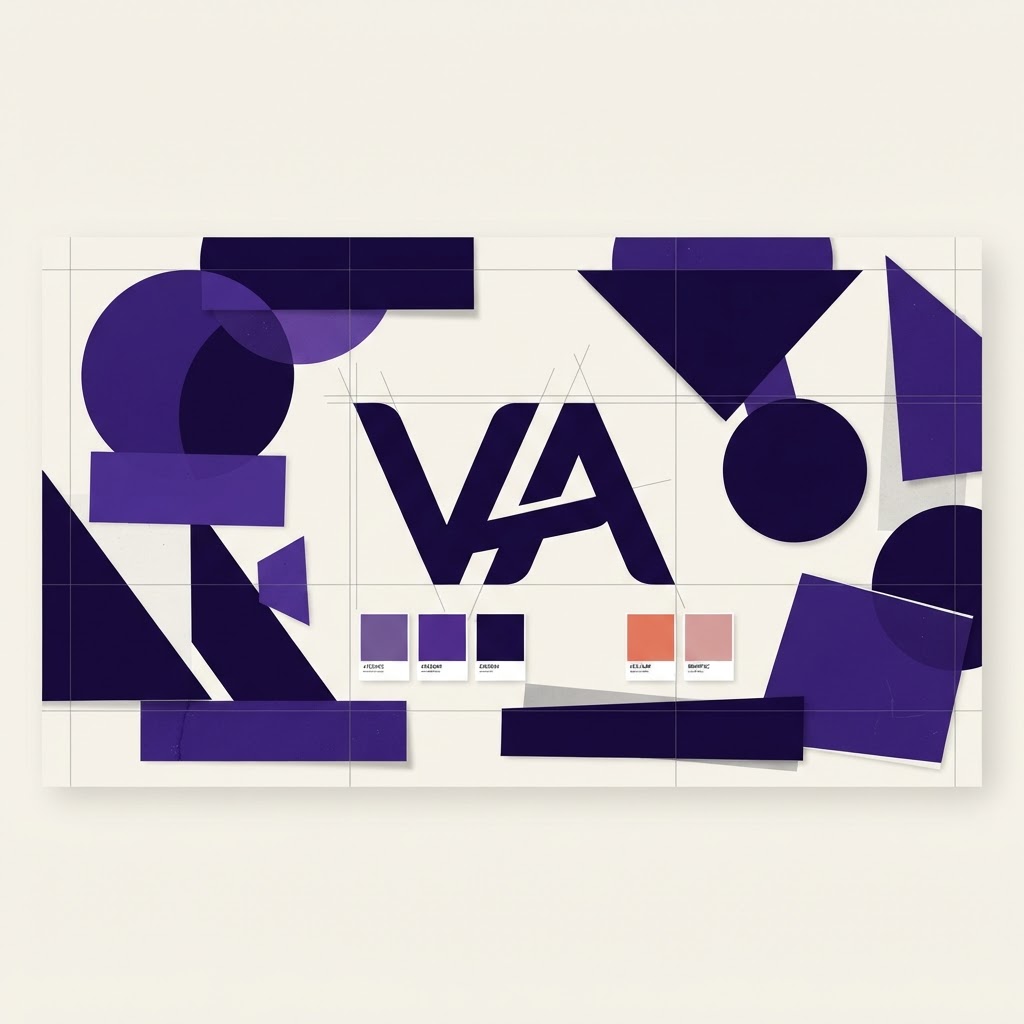
Moodboards, palette directions, texture studies, and naming long-lists. Where a designer once showed three directions, AI lets you react to thirty. Reacting is faster than imagining, and taste sharpens when you have something to reject.
Verbal territory mapping
Ask AI to describe how your category talks: the promises, the clichés, the words every competitor uses. That list becomes a map of what to avoid. Differentiation often starts as a subtraction exercise.
Voice drafting
Once you define voice in plain instructions, such as warm, direct, no exclamation marks, no corporate filler, AI can draft social captions and email copy that stay close to it. It is a rehearsal partner for tone.
Variant production
Resizing a mark, generating social templates, writing forty product descriptions, and adapting headlines per platform are mechanical jobs AI handles without complaint.
Accessibility and consistency checks
Contrast ratios, alt text, taglines at different lengths, and whether a name reads well out loud are all checkable at speed.
What AI cannot do, and why it matters
Positioning. Deciding to be the premium option, or the fastest, or the only one that guarantees a two-hour response, is a business decision with real cost. AI will happily write copy for all three without telling you that you can only pick one.
Originality and ownership. AI image models are trained on existing work. A generated mark can land uncomfortably close to an existing logo, and you will not know until someone sends a letter. Current guidance from the Canadian Intellectual Property Office is clear that AI-generated work raises authorship questions, and you still need a trademark search before you use a mark commercially.
Vector craft. A real logo has to work at sixteen pixels, in one colour, embroidered, cut in vinyl, and reversed out of a photo. Generated images are usually raster, with details that collapse at small sizes and outlines that are not mathematically clean.
Consistency over years. Brands accumulate: signage, invoices, vehicle wraps, uniforms, a website rebuilt in 2029. Consistency requires rules, files, and a person who owns them.
Taste under constraint. Choosing the version that is quieter because the business needs to feel calm, not loud, is judgement. Models optimise for impressive, which is rarely the same thing.
The hybrid workflow that actually works
- Strategy first, by a human. Two pages: who you serve, what you promise, what you refuse to do, how you want to be described. No tools yet.
- AI-assisted exploration. Generate moodboards, palettes, and type pairings against that strategy. Collect what feels true.
- Human design, built properly. A designer turns chosen directions into a real mark in vector format, with colour, type, and spacing rules.
- AI for production. Templates, captions, alt text, and copy variants produced under those rules.
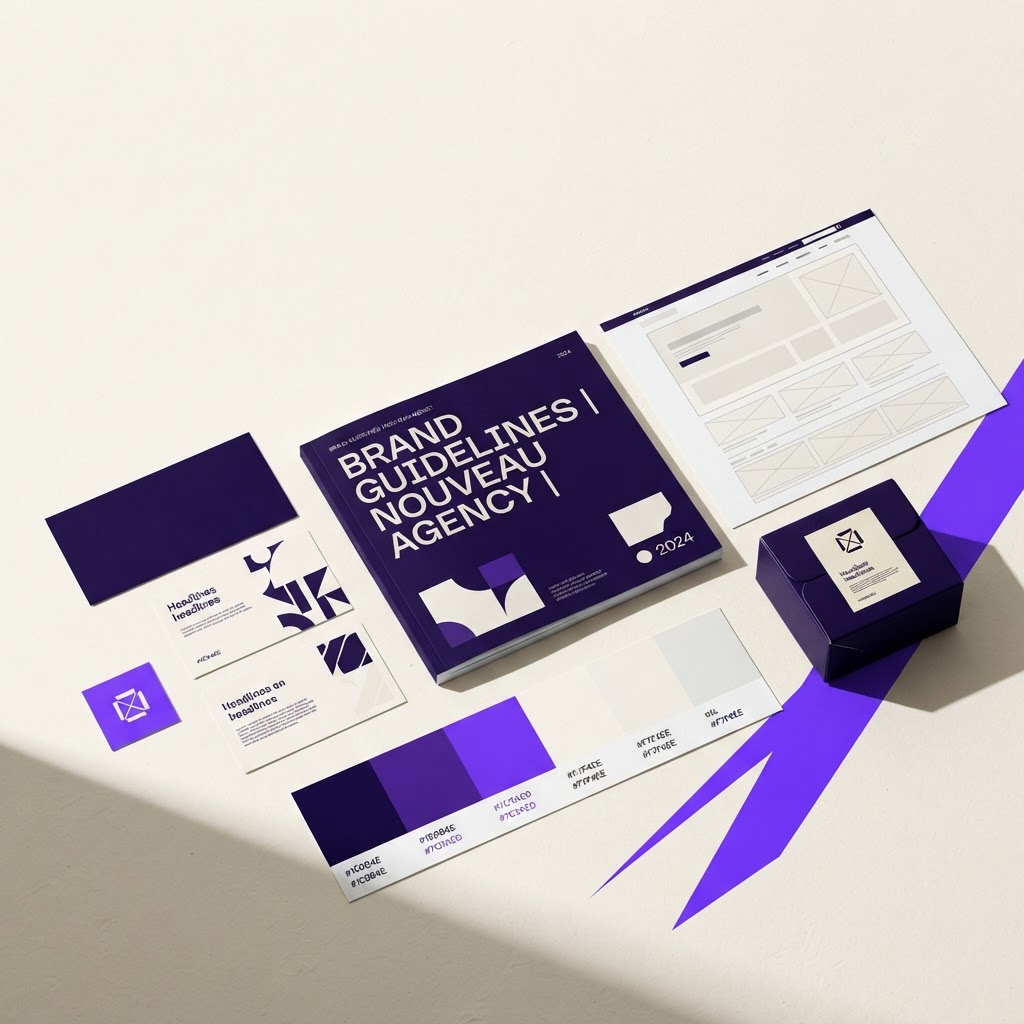
- A documented system. A short brand guidelines document with the logo files, palette codes, type sizes, and three examples of correct and incorrect use. Without this, every future freelancer interprets your brand differently.
A pre-launch checklist for AI-assisted identity
- Has a trademark search been done for the name and mark in Canada?
- Does the logo work in one colour at 16 pixels?
- Are the files vector, with correct colour codes documented?
- Does the identity still make sense when the trend that inspired it disappears?
- Can your team describe the brand in one sentence without reading a slide?
- Do the colours meet contrast requirements for text on your website?
- Is there a written rule for how AI may and may not be used in brand content?
What this costs you in practice
AI logo generators run from free to about $60. A proper identity, with strategy and files you can build on, runs from a few thousand dollars. The gap is not artistry for its own sake. It is the difference between a picture you like and a system you can operate for ten years. For a business spending $25,000 on a vehicle wrap and signage, a cheap generated mark is the most expensive option on the table.
FAQ
Can I trademark an AI-generated logo?
Trademark protects the mark you use in commerce, and registration is possible, but you still need a clearance search and you should be able to show you have rights to use it. AI-generated work complicates authorship claims. Get advice before you build a brand around it.
Is AI good enough for a small business logo?
For a side project or a weekend test, yes. For a business that will print signage, wrap vehicles, and be searched by name, no. Have a designer redraw whatever direction you like.
Can AI write my brand guidelines?
It can draft the structure and the plain-language rules, which saves real time. A human still has to decide the rules and check that the examples are correct.
Will using AI make my brand look like everyone else's?
Only if you let it make the decisions. Used after strategy, AI widens your options. Used instead of strategy, it averages you into the category.
How long does a proper brand identity take?
With strategy, exploration, and design rounds, typically four to eight weeks for a small business. The AI-assisted exploration step usually removes a week of back and forth.
Want a brand that is yours?
We build identities with strategy first and AI where it helps, not where it decides. See how we work, read about our founder's approach, or book a 30-minute strategy call. You can also browse our branding and web design services and recent work.