Complete Guide to Building a Strong Brand Identity for Small Businesses
Complete Guide to Building a Strong Brand Identity for Small Businesses
Your brand identity is more than just a logo—it's the complete visual and emotional experience customers have with your business. For small businesses competing against larger corporations, a strong brand identity is your secret weapon.
What is Brand Identity?
Brand identity encompasses all visual and verbal elements that represent your business:
- Logo and logo variations
- Color palette
- Typography
- Imagery style
- Voice and tone
- Messaging
- Brand personality
Why Brand Identity Matters for Small Businesses
1. Recognition and Recall
Consistent branding increases recognition by up to 80%. When customers can easily identify your business, they're more likely to choose you over competitors.
2. Trust and Credibility
77% of consumers buy from brands they trust. Professional, consistent branding signals reliability and quality.
3. Emotional Connection
Brands with strong identities create emotional connections. Customers don't just buy products—they buy into stories, values, and experiences.
4. Competitive Advantage
In crowded markets, unique brand identity helps you stand out. It's what makes customers remember you.
5. Premium Pricing
Strong brands can charge 20-30% more than generic competitors. Customers pay for perceived value.
Step-by-Step Guide to Building Your Brand Identity
Step 1: Define Your Brand Strategy
Before designing anything, understand your brand foundation:
Brand Purpose: Why does your business exist beyond making money?
Mission Statement: What do you do and for whom?
Vision Statement: Where do you want to be in 5-10 years?
Core Values: What principles guide your business decisions?
Brand Personality: If your brand were a person, what would they be like?
- Innovative or traditional?
- Playful or serious?
- Affordable or luxury?
- Friendly or professional?
Target Audience: Who are your ideal customers?
- Demographics (age, income, location)
- Psychographics (values, interests, lifestyle)
- Pain points and needs
- Buying behavior
Step 2: Research Your Competition
Analyze 5-10 competitors:
- What are their brand identities?
- How do they position themselves?
- What colors and styles do they use?
- What gaps can you fill?
Identify opportunities to differentiate your brand.
Step 3: Develop Your Visual Identity
Logo Design Your logo is the cornerstone of visual identity. It should be:
- Simple and memorable
- Scalable and versatile
- Appropriate for your industry
- Unique and distinctive
Color Palette Choose 2-4 primary colors and 2-3 secondary colors:
- Primary colors: Main brand colors used most frequently
- Secondary colors: Supporting colors for accents and variety
- Neutral colors: Gray, black, white for backgrounds and text
Document specific color codes:
- HEX codes for digital
- RGB for screens
- CMYK for print
- Pantone for branded materials
Typography Select 2-3 fonts:
- Primary font: Headlines and important text
- Secondary font: Body copy and descriptions
- Accent font (optional): Special use cases
Ensure fonts are:
- Legible at all sizes
- Available for digital and print
- Aligned with brand personality
- Licensed for commercial use
Imagery Style Define what types of images represent your brand:
- Photography vs. illustrations
- Color treatment (vibrant, muted, black & white)
- Subject matter (people, products, lifestyle)
- Mood and tone (energetic, calm, inspiring)
Graphic Elements Create supporting visual elements:
- Patterns
- Icons
- Shapes
- Textures
- Borders
Step 4: Establish Brand Voice and Messaging
Brand Voice How your brand communicates:
- Tone (formal, casual, humorous, inspirational)
- Language (simple, technical, sophisticated)
- Personality traits (confident, helpful, innovative)
Key Messages
- Tagline: 3-7 words capturing your essence
- Value proposition: Why customers should choose you
- Brand story: Your origin and journey
- Mission statement: Your purpose and goals
Messaging Framework Create templates for:
- Social media posts
- Email communications
- Website copy
- Customer service responses
Step 5: Create Brand Guidelines
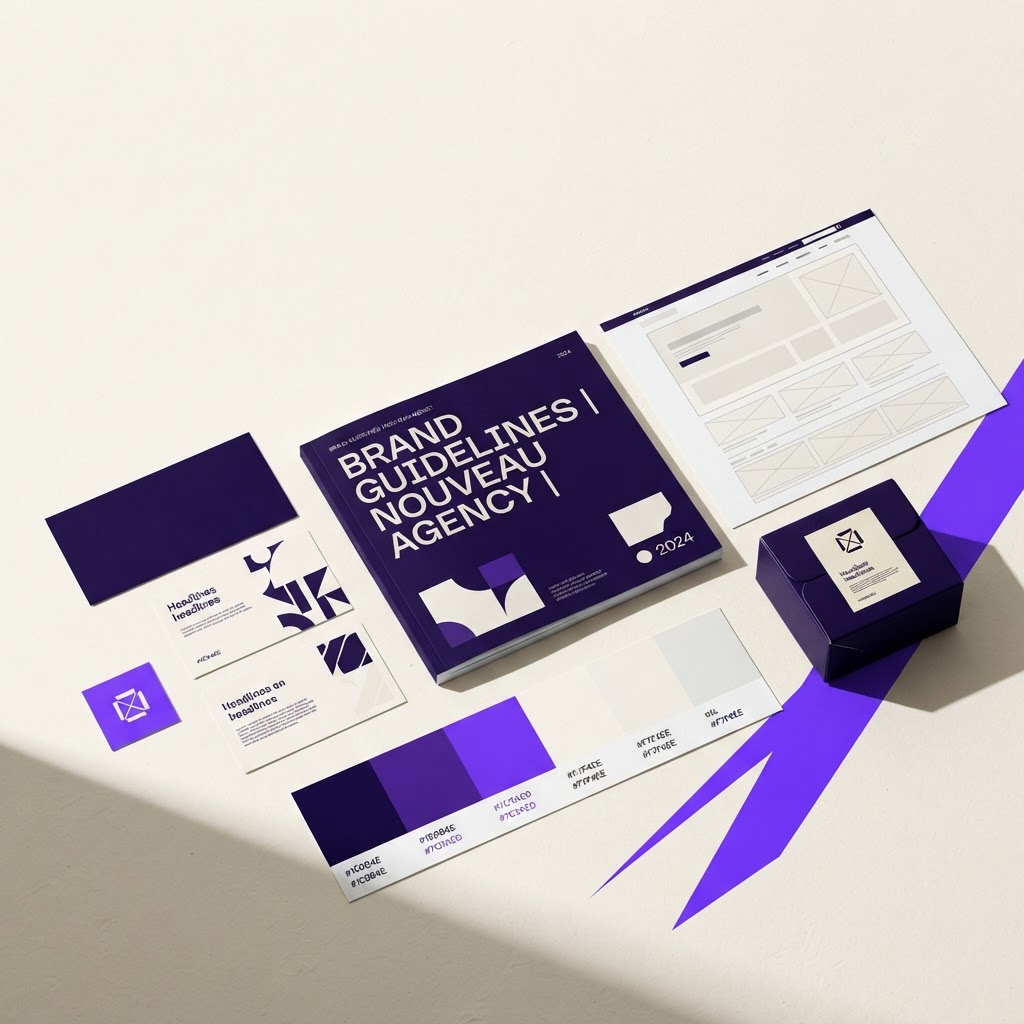
Document everything in a brand style guide:
Logo Usage
- Primary logo
- Secondary variations
- Minimum sizes
- Clear space requirements
- Correct and incorrect usage examples
Color Specifications
- Color codes for all formats
- Color combinations
- Backgrounds to use/avoid
Typography Rules
- Font names and where to download
- Size hierarchies
- Line spacing
- Usage examples
Imagery Guidelines
- Photo style requirements
- Image treatments
- Do's and don'ts
Voice and Tone
- Brand personality description
- Writing style rules
- Example copy
Step 6: Implement Across All Touchpoints
Apply your brand identity consistently:
Digital
- Website
- Social media profiles
- Email signatures
- Digital ads
- Mobile app (if applicable)
- Business cards
- Letterhead
- Brochures
- Packaging
- Signage
Environmental
- Office/store design
- Vehicle wraps
- Uniforms
- Trade show booths
Communication
- Customer service scripts
- Email templates
- Presentations
- Sales materials
Common Brand Identity Mistakes
- Inconsistency: Using different logos, colors, or fonts randomly
- Following Trends Blindly: Trendy designs become dated quickly
- Ignoring Target Audience: Designing for yourself instead of customers
- Copying Competitors: Being too similar to others in your industry
- Overcomplicating: Too many colors, fonts, and elements
- Neglecting Digital: Not optimizing for digital platforms
- No Documentation: Not creating brand guidelines
Maintaining Brand Consistency
Create Templates
Develop templates for common materials:
- Social media posts
- Email newsletters
- Presentations
- Documents
- Advertisements
Train Your Team
Ensure everyone understands:
- Brand values and personality
- How to use brand assets
- Where to find resources
- Who to contact with questions
Regular Audits
Quarterly, review:
- All customer touchpoints
- Competitor activities
- Brand perception
- Consistency across channels
Update Strategically
Brands evolve, but changes should be:
- Strategic, not reactive
- Gradual, not sudden
- Tested with your audience
- Documented in updated guidelines
Measuring Brand Identity Success
Track these metrics:
- Brand Awareness: How many people recognize your brand?
- Brand Recall: Can people remember your brand unprompted?
- Brand Perception: What do people think about your brand?
- Customer Loyalty: Are customers returning and referring?
- Social Media Engagement: How do people interact with your content?
- Website Traffic: Are more people finding you?
When to Rebrand
Consider rebranding if:
- Your current brand feels dated
- You're expanding to new markets
- Your target audience has changed
- Your brand doesn't reflect your values
- You've outgrown your current identity
- There's been a merger or acquisition
Working with Professionals
While DIY is possible, professional brand designers offer:
- Strategic Thinking: Understanding business goals
- Design Expertise: Creating polished, professional assets
- Market Knowledge: Understanding what works in your industry
- Efficiency: Faster results with fewer revisions
- Comprehensive Deliverables: All assets you need from day one
Conclusion
Building a strong brand identity is an investment in your business's future. It takes time, thought, and consistency, but the rewards are substantial: increased recognition, customer loyalty, and the ability to compete effectively.
At Brand Street Agency, we specialize in creating comprehensive brand identities for small and medium businesses. With over 20 years of experience, we understand what makes brands succeed in today's marketplace.
Ready to build a brand that stands out? Contact us for a free brand consultation.